Waterproof dog beds are one of the highest-margin pet bed categories, commanding a 30-50% retail premium over standard beds. The waterproof claim is a powerful purchase trigger for dog owners dealing with puppies, senior dogs with incontinence, droolers, and outdoor use. But "waterproof" is meaningless without understanding the specific material and construction that delivers it.
As a pet bed manufacturer producing 30,000+ units monthly, we have tested every waterproof technology on the market. This guide breaks down the four main waterproof materials used in dog bed covers, with objective performance data, cost comparisons, and OEM customization options.
Why Waterproof Dog Beds Are the Fastest-Growing Segment
Market data tells a clear story:
- 47% of US dog owners report their dog has had at least one "accident" on a bed (AKC 2024 Pet Owner Survey)
- Senior dog ownership is rising as pet lifespans increase — 28% of US dogs are 7+ years old, and urinary incontinence affects 20% of spayed females over age 5
- Outdoor pet culture (camping, hiking, beach) continues to grow, driving demand for beds that handle mud, rain, and wet fur
- Amazon search volume for "waterproof dog bed" exceeds 22,000 monthly searches in the US alone
For retailers and brands, waterproof beds solve a real, recurring problem — and customers will pay more for a genuine solution.
The 4 Waterproof Materials Compared
| Property | PU-Coated Oxford | TPU Laminate | PVC-Backed Polyester | PUL Fabric |
|---|---|---|---|---|
| Hydrostatic head | 3,000-8,000 mm | 10,000-20,000 mm | 5,000-10,000 mm | 8,000-15,000 mm |
| Breathability (MVTR) | 500-2,000 g/m2/24hr | 3,000-8,000 g/m2/24hr | Near zero | 2,000-5,000 g/m2/24hr |
| Wash durability | 20-30 cycles | 50+ cycles | 30-40 cycles | 50+ cycles |
| Eco-friendliness | Moderate (solvent-based) | High (solvent-free) | Low (PVC concerns) | High (CPSIA certified) |
| Fabric cost/meter | $2.00-$3.50 | $4.00-$6.50 | $1.50-$2.50 | $5.00-$7.00 |
| Feel/hand | Slightly stiff | Soft, flexible | Stiff, plasticky | Soft, cloth-like |
| Best application | Budget-mid range beds | Premium beds, EU market | Outdoor/kennel only | Baby-grade pet beds |
1. PU-Coated Oxford Fabric
The industry workhorse. A layer of polyurethane (PU) is applied to the back side of 600D or 1680D Oxford polyester fabric. This is the most widely used waterproof material in dog beds globally.
Strengths: Excellent cost-to-performance ratio, good abrasion resistance, available in dozens of colors, easy to sew and process in factory settings.
Weaknesses: PU coating degrades with repeated washing (noticeable after 20-30 machine wash cycles). The solvent-based coating process means it is not suitable for brands marketing "eco-friendly" or "non-toxic" products. The coated side has a slightly plastic feel that some dogs find less comfortable than fabric.
Technical specification to request from your supplier: Coating weight should be 25-40 g/m2 for adequate waterproofing. Below 20 g/m2, the coating is too thin and will fail at seam penetration points. Ask for hydrostatic head test results — minimum 3,000 mm for "water-resistant," 5,000 mm+ for "waterproof."
2. TPU (Thermoplastic Polyurethane) Laminate
The premium choice. TPU is a thin film laminated to the fabric using heat and pressure (no solvents). It creates a waterproof barrier that is simultaneously breathable — moisture vapor passes through while liquid water does not.
Strengths: Superior waterproofing (10,000-20,000 mm hydrostatic head), excellent breathability (prevents the "sweaty" feel dogs dislike), maintains performance through 50+ wash cycles, eco-friendly production process, OEKO-TEX certifiable.
Weaknesses: 60-80% more expensive than PU coating. Requires specialized lamination equipment that not all factories have. Slightly thicker than PU-coated fabric, which can affect sewing on tight curves.
Where TPU shines: Premium brands, EU markets (where PVC restrictions are tightening), and any product marketed as "breathable waterproof." TPU is what separates a $35 waterproof bed from a $65 one at retail.
3. PVC-Backed Polyester
The budget option. A PVC (polyvinyl chloride) layer is calendered or laminated onto polyester fabric. Extremely waterproof and the cheapest option to produce.
Strengths: Lowest cost, excellent waterproofing, easy to wipe clean with a damp cloth.
Weaknesses: Zero breathability — moisture cannot escape, leading to condensation and odor buildup. PVC contains phthalates that are restricted under EU REACH and California Prop 65. Stiff, crinkly feel that many dogs reject. Being phased out by major retailers (Chewy, Petco, Amazon's own brands now avoid PVC).
Still viable for: Kennel and shelter beds where durability and hose-down cleaning matter more than comfort. Outdoor-only products where breathability is less important.
4. PUL (Polyurethane Laminate) Fabric
Originally developed for baby cloth diapers, PUL is a 1-mil polyurethane film laminated to polyester knit. It has crossed over into the pet industry for premium, baby-safe pet beds.
Strengths: CPSIA certified (safe for children, so safe for pets), soft and flexible, odor-free, antimicrobial properties available, excellent wash durability.
Weaknesses: Highest cost. Not as abrasion-resistant as Oxford for chew-prone dogs. Limited color options compared to woven fabrics.
Construction Details That Make or Break Waterproofing
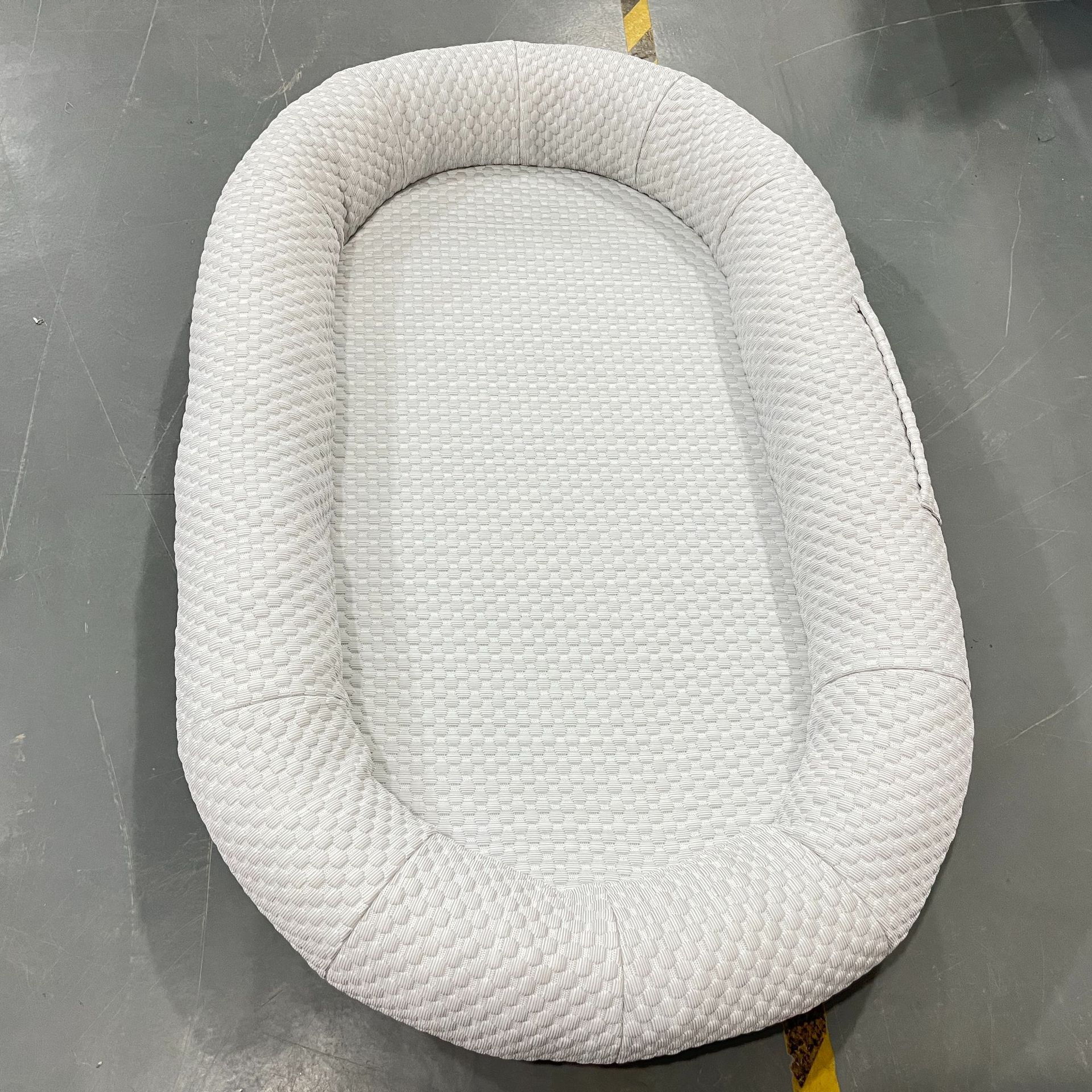
A waterproof fabric is only as good as its weakest point — and that point is almost always the seams. Here is what to specify in your OEM orders:
Seam Sealing
- Seam tape (heat-sealed): A 20-25 mm waterproof tape is applied over every seam using heat and pressure. This is the gold standard for waterproof construction. Adds $0.15-$0.25 per unit.
- Flat-felled seams: The fabric is folded and sewn twice so that raw edges are enclosed. Not fully waterproof but significantly reduces seam leakage. Standard on mid-range products.
- Welded seams (RF or ultrasonic): For PVC and TPU materials, seams can be welded instead of sewn, creating a 100% waterproof joint. Most expensive option, used in premium outdoor beds.
Zipper Protection
Zippers are the second most common leak point. Solutions include:
- Storm flap: A fabric flap covers the zipper from the outside, preventing direct water contact. Most common solution.
- Waterproof zipper (YKK Aquaguard): PU-coated zipper tape creates a water-tight seal when closed. Adds $0.50-$0.80 per unit vs. standard zippers.
- Bottom-mounted zipper: Placing the zipper on the bottom of the bed means water from the sleeping surface never reaches it. Simple and effective.
Cover Design: Envelope vs. Full-Zip
- Full-zip removable cover: The entire cover unzips and comes off for machine washing. Most popular for home use. Requires careful zipper waterproofing.
- Envelope/slip cover: The cover slides over the foam insert like a pillowcase, with a flap that tucks under. No zipper means one less leak point, but harder to put back on after washing.
- Bonded cover: The waterproof layer is permanently bonded to the foam. The entire bed is wiped clean rather than machine washed. Best for outdoor/kennel use.
Waterproof Dog Bed Covers for Different Use Cases
| Use Case | Recommended Material | Key Features | Price Point (retail) |
|---|---|---|---|
| Indoor — puppy training | TPU laminate | Breathable, soft, washable | $35-$55 |
| Indoor — senior/incontinent | PUL or TPU | Odor-free, antimicrobial, quiet | $40-$65 |
| Outdoor — patio/garden | PU-coated 1680D Oxford | UV-resistant, abrasion-proof | $30-$50 |
| Outdoor — camping/travel | PU-coated 600D Oxford | Lightweight, packable | $25-$40 |
| Kennel/shelter | PVC-backed polyester | Hose-down cleaning, cheapest | $15-$25 |
| Replacement cover (sold separately) | Any — match original | Exact-fit, brand loyalty driver | $15-$30 |
OEM Customization Options for Waterproof Covers
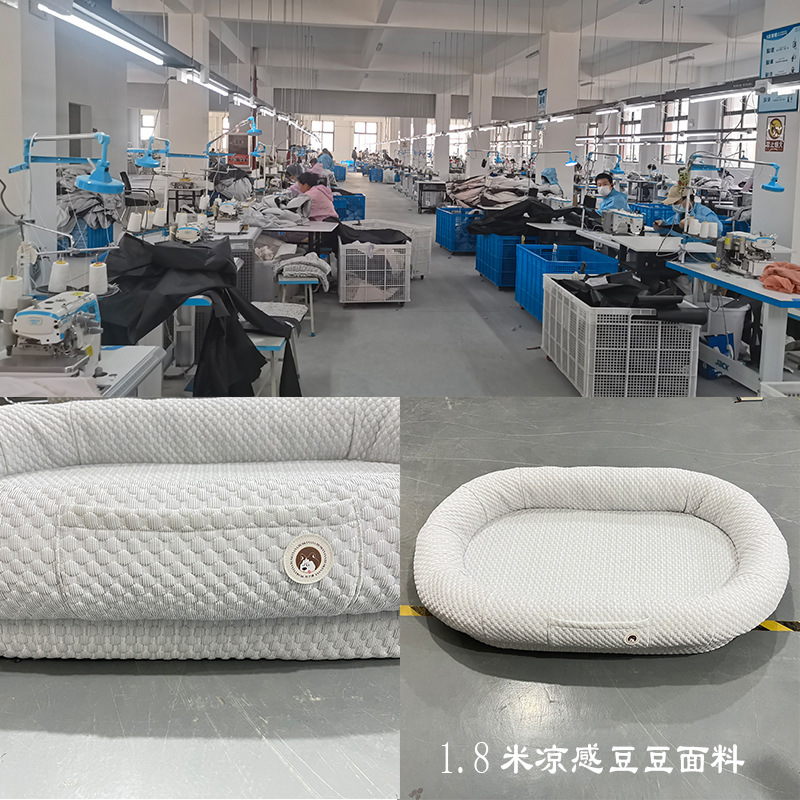
When ordering waterproof dog bed covers from Feitu Pet, you can customize:
- Waterproof material: PU Oxford (standard), TPU laminate (premium), or PUL (ultra-premium). We maintain stock of all three in our warehouse.
- Fabric weight: 300D (lightweight), 600D (standard), 1680D (heavy-duty). Higher denier = more durable but heavier and costlier.
- Color and print: Solid colors (Pantone matching available), printed patterns (sublimation or screen print, MOQ 1,000 meters).
- Closure type: Full-zip, L-shaped zip, envelope, or Velcro closure.
- Inner lining: Plain waterproof backing, or dual-layer with soft fleece/flannel inner surface for comfort.
- Anti-slip base: Silicone dot printing on the bottom surface to prevent sliding on hard floors. Adds $0.10-$0.20 per unit.
- Elastic edge: Fitted-sheet style elastic edge for covers designed to wrap around existing foam inserts.
Sell Covers Separately: A High-Margin Add-On Strategy
Smart pet bed brands sell replacement waterproof covers as a standalone product. Here is why this is one of the highest-margin SKUs in your product line:
- Repeat purchase: Covers wear out every 12-18 months, while foam inserts last 3-5 years. Selling covers separately creates recurring revenue.
- Low shipping cost: A cover ships in a poly mailer ($3-$5 to ship) vs. a complete bed in a large box ($10-$15).
- High perceived value: A waterproof cover that costs $3.50 to manufacture sells for $18-$28 retail — a 5-8x markup.
- Reduces returns: When a customer's bed cover gets damaged or stained, they buy a replacement cover instead of returning the whole bed.
Feitu Pet manufactures both complete waterproof dog beds and replacement covers as separate SKUs. We also produce waterproof car seat covers using the same factory lines and material inventory. Request samples and pricing for your specific product lineup.
Related reading: Chew-Proof Dog Beds for Heavy Chewers | Pet Bed Materials & Filling Guide