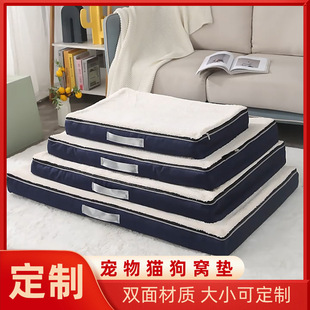
Choosing the wrong size dog bed is the number one reason pet owners return beds — and the number one reason wholesale buyers get negative product reviews. A bed that is too small forces a dog to hang limbs over the edge, creating pressure points and poor sleep. A bed that is too large wastes shelf space and shipping volume without adding comfort.
At VF Pets, we have manufactured over 200,000 dog beds annually across our 6,000 sqm factory in Xuzhou, China. In this guide, we share the exact sizing framework our product team uses when developing beds for brands worldwide — broken down by breed, weight class, sleeping style, and fill material.
How to Measure Your Dog for a Bed
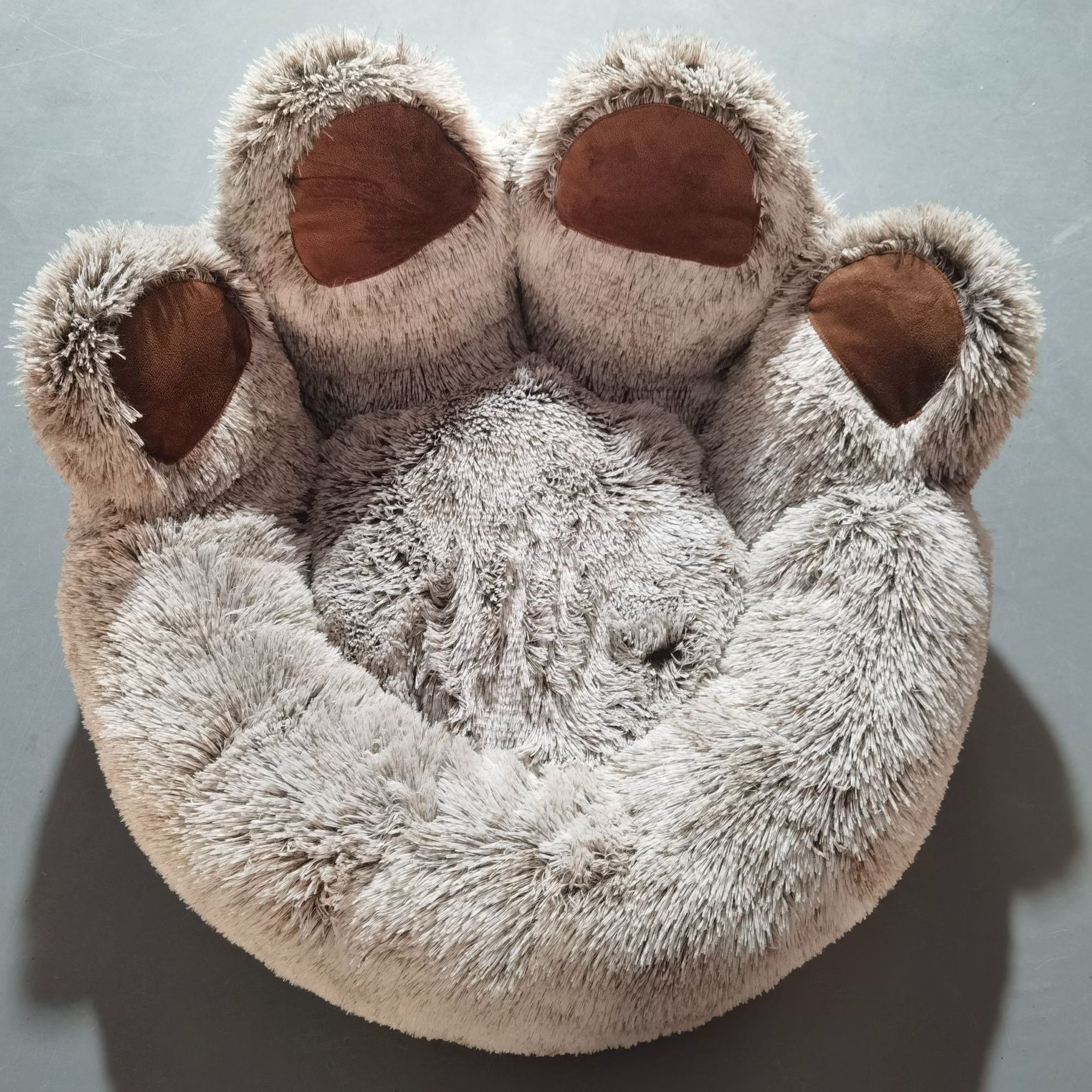
Before looking at any size chart, you need two measurements from your dog:
- Body length: Measure from the tip of the nose to the base of the tail while your dog is standing in a natural position. Do not include the tail.
- Body width: Measure across the widest point of the chest (usually just behind the front legs).
Now apply the +15 cm rule: add at least 15 cm (6 inches) to the body length for the minimum bed length, and 15 cm to the body width for the minimum bed width. This buffer gives the dog room to shift sleeping positions without hanging over the edge.
For dogs that sleep fully stretched out on their side, increase the buffer to +25 cm (10 inches) in both directions. For dogs that sleep tightly curled, the standard +15 cm is sufficient — or consider a round calming donut bed where the diameter should be at least 1.5 times the curled-up diameter of the dog.
Dog Bed Size Chart: Standard Dimensions
The pet bed industry does not have a single universal size standard — an "XL" from one brand might be a "Large" from another. At VF Pets, our standard size range is based on interior sleeping area (not exterior frame dimensions, which include bolsters):
| Bed Size | Interior Dimensions (L x W) | Dog Weight Range | Typical Breeds |
|---|---|---|---|
| Small (S) | 55 x 45 cm (22 x 18 in) | Up to 7 kg (15 lbs) | Chihuahua, Yorkie, Pomeranian, Maltese |
| Medium (M) | 75 x 55 cm (30 x 22 in) | 7-18 kg (15-40 lbs) | Beagle, Cocker Spaniel, French Bulldog, Corgi |
| Large (L) | 100 x 75 cm (40 x 30 in) | 18-34 kg (40-75 lbs) | Labrador, Golden Retriever, Boxer, Australian Shepherd |
| X-Large (XL) | 120 x 85 cm (48 x 34 in) | 34-50 kg (75-110 lbs) | German Shepherd, Rottweiler, Doberman, Husky |
| XX-Large (XXL) | 140 x 100 cm (55 x 40 in) | 50+ kg (110+ lbs) | Great Dane, Mastiff, Saint Bernard, Newfoundland |
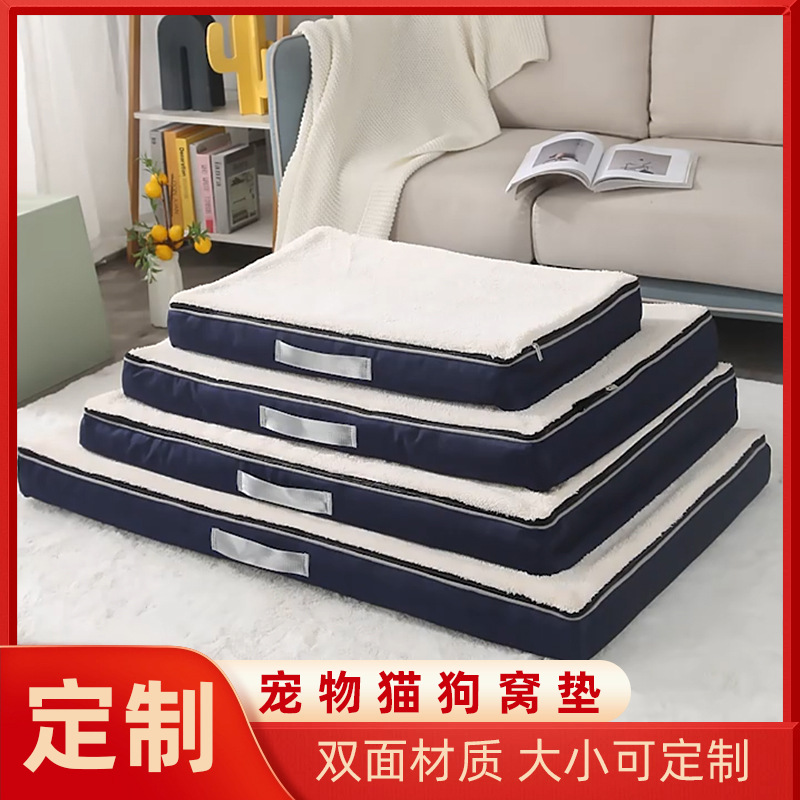
Note for wholesale buyers: Our factory can produce any custom dimension between these sizes. If your target market skews toward medium-to-large dogs (the highest-volume segment in North America and Europe), we recommend stocking M, L, and XL as your core SKUs.
Complete Breed-by-Breed Dog Bed Sizing Guide
The table below covers 25 of the most popular dog breeds worldwide, organized by size category. Each recommendation accounts for the breed's average adult weight, body length, and typical sleeping habits.
Small Breeds (Under 7 kg / 15 lbs)
| Breed | Adult Weight | Body Length | Recommended Size | Best Bed Type |
|---|---|---|---|---|
| Chihuahua | 1.5-3 kg (3-6 lbs) | 23-30 cm | S | Donut / Cave bed |
| Yorkshire Terrier | 2-3 kg (4-7 lbs) | 25-30 cm | S | Bolster / Cave bed |
| Pomeranian | 1.5-3 kg (3-7 lbs) | 25-30 cm | S | Donut / Bolster |
| Maltese | 3-4 kg (6-9 lbs) | 28-33 cm | S | Bolster / Flat cushion |
| Dachshund (Mini) | 4-5 kg (9-11 lbs) | 33-38 cm | S-M | Bolster (low entry) |
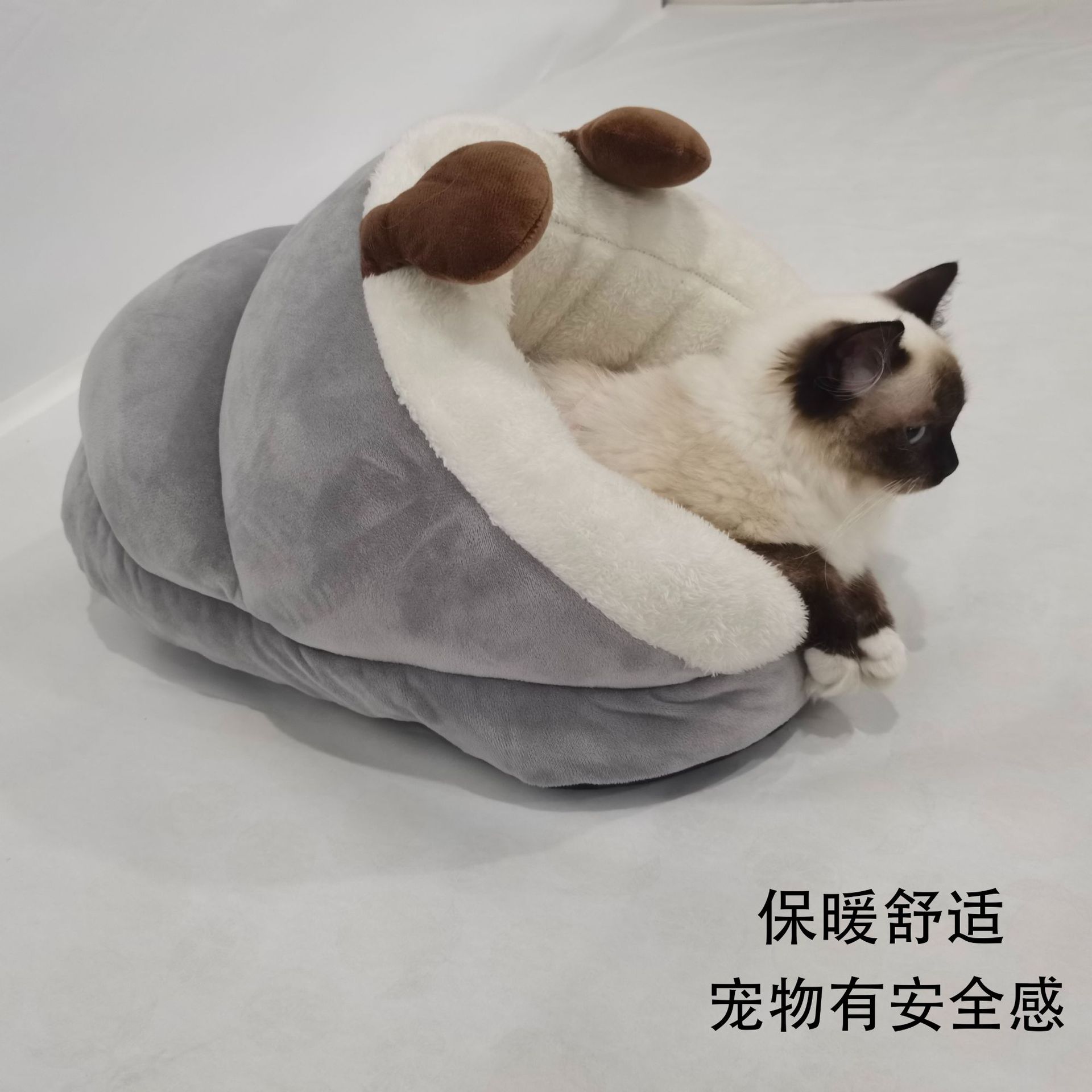
Sizing tip: Small breeds tend to burrow and curl tightly. A calming donut bed or cave-style bed with raised walls provides the enclosed feeling they crave. Do not oversize — a bed that is too spacious feels exposed and insecure to a 3 kg dog.
Medium Breeds (7-18 kg / 15-40 lbs)
| Breed | Adult Weight | Body Length | Recommended Size | Best Bed Type |
|---|---|---|---|---|
| French Bulldog | 8-13 kg (18-28 lbs) | 35-40 cm | M | Bolster / Orthopedic flat |
| Beagle | 9-11 kg (20-25 lbs) | 38-43 cm | M | Bolster / Rectangular |
| Cocker Spaniel | 12-16 kg (26-35 lbs) | 40-45 cm | M-L | Bolster / Donut |
| Pembroke Welsh Corgi | 10-14 kg (22-30 lbs) | 35-40 cm | M | Orthopedic flat (low entry) |
| Shetland Sheepdog | 8-12 kg (18-27 lbs) | 38-43 cm | M | Bolster / Rectangular |
| English Bulldog | 18-25 kg (40-55 lbs) | 43-48 cm | L | Orthopedic memory foam |
Sizing tip: Brachycephalic breeds like French Bulldogs and English Bulldogs overheat easily. For these breeds, avoid deep-walled cave beds that trap body heat. Choose a flat or low-bolster bed with breathable fabric — our factory offers a mesh-panel option specifically for this purpose.
Large Breeds (18-34 kg / 40-75 lbs)
| Breed | Adult Weight | Body Length | Recommended Size | Best Bed Type |
|---|---|---|---|---|
| Labrador Retriever | 25-36 kg (55-80 lbs) | 55-62 cm | L-XL | Orthopedic / Bolster |
| Golden Retriever | 25-34 kg (55-75 lbs) | 55-62 cm | L-XL | Orthopedic / Bolster |
| Boxer | 25-32 kg (55-70 lbs) | 53-60 cm | L | Orthopedic flat / Bolster |
| Australian Shepherd | 18-30 kg (40-65 lbs) | 50-58 cm | L | Bolster / Rectangular |
| Standard Poodle | 20-32 kg (45-70 lbs) | 55-62 cm | L | Bolster / Elevated |
| Border Collie | 14-20 kg (30-45 lbs) | 48-55 cm | M-L | Bolster / Flat cushion |
Sizing tip: Labrador and Golden Retriever owners are the largest single breed-segment of dog bed buyers. Stock L and XL in these breeds' size range and you will cover roughly 30% of the U.S. market demand (Labradors have been the #1 registered breed in the U.S. for over 30 consecutive years, per AKC data). Both breeds are frequent side-sleepers, so rectangular beds outperform round beds for this segment.
Extra-Large and Giant Breeds (34+ kg / 75+ lbs)
| Breed | Adult Weight | Body Length | Recommended Size | Best Bed Type |
|---|---|---|---|---|
| German Shepherd | 30-40 kg (66-88 lbs) | 57-65 cm | XL | Orthopedic memory foam |
| Siberian Husky | 20-27 kg (44-60 lbs) | 53-60 cm | L-XL | Elevated / Cooling bed |
| Rottweiler | 36-60 kg (80-132 lbs) | 60-68 cm | XL-XXL | Orthopedic / Chew-resistant |
| Doberman Pinscher | 32-45 kg (70-100 lbs) | 63-72 cm | XL | Orthopedic flat |
| Great Dane | 50-80 kg (110-175 lbs) | 75-90 cm | XXL | Orthopedic memory foam |
| English Mastiff | 55-100 kg (120-220 lbs) | 75-90 cm | XXL | Orthopedic / Chew-resistant |
| Saint Bernard | 55-80 kg (120-180 lbs) | 70-85 cm | XXL | Orthopedic / Waterproof |
| Newfoundland | 55-70 kg (120-155 lbs) | 68-80 cm | XXL | Waterproof / Orthopedic |
Sizing tip: Giant breeds need beds with a foam base thickness of at least 10-12 cm (4-5 in) — anything thinner compresses under their weight within weeks. At VF Pets, our XL and XXL chew-resistant beds use a 12 cm high-density foam slab (45 kg/m3 density) that maintains shape for 3+ years of daily use by dogs up to 100 kg.
Sleeping Position Guide: Match the Bed Shape to How Your Dog Sleeps
A dog's sleeping position determines bed shape more than their breed does. Here is how to match the two:
The Curler (Donut Position)
Dogs that sleep in a tight ball with nose tucked against tail. Common in small breeds, anxious dogs, and cold environments.
- Best bed shape: Round donut bed or oval bolster bed
- Sizing rule: Bed diameter = 1.5x the dog's curled-up diameter
- Recommended product: Calming Donut Dog Bed — deep plush walls provide the enclosed feeling curlers need
The Side Sleeper (Stretched Out)
Dogs that flop onto one side with all four legs extended. Very common in Labradors, Golden Retrievers, Greyhounds, and other large breeds.
- Best bed shape: Rectangular flat bed or low-bolster rectangular bed
- Sizing rule: Bed length = nose-to-tail + 25 cm minimum; bed width = body height (floor to spine when lying down) + 20 cm
- Recommended product: Bolster Dog Bed — raised edges on three sides give a headrest without restricting leg extension
The Sprawler (Superman Position)
Dogs that sleep flat on their belly with all four legs spread outward. Common in puppies, high-energy breeds, and warm-climate dogs.
- Best bed shape: Flat rectangular cushion or elevated/cot-style bed
- Sizing rule: Measure the dog in full sprawl position and add 15 cm in each direction
- Why elevated beds work: Air circulates under the dog, keeping belly-sleepers cool. Our factory produces elevated beds with breathable mesh that are ideal for sprawlers in warm climates
The Burrower
Dogs that dig under blankets, pillows, or bed covers before settling. Common in Dachshunds, Terriers, Huskies, and other breeds with denning instincts.
- Best bed shape: Cave bed or hooded bed with a removable cover
- Sizing rule: Interior cavity should be at least 1.3x the dog's curled body diameter in every direction
- Manufacturing note: Cave beds are one of the fastest-growing pet bed sub-categories. At VF Pets we produce cave beds with a removable/washable hood that can convert to a standard bolster bed
Fill Material Guide: Which Foam Suits Which Dog
The fill material inside a dog bed determines comfort, durability, and price point. Here is our factory's breakdown of the three most common fill types and which dogs they are best suited for:
1. High-Density Memory Foam (45-60 kg/m3)
- Best for: Senior dogs, large/giant breeds, dogs with joint issues (hip dysplasia, arthritis, elbow dysplasia)
- Why: Conforms to the dog's body shape and distributes weight evenly — reduces pressure on joints by up to 50% compared to poly-fill (based on pressure mapping tests from veterinary orthopedic studies)
- Durability: Maintains shape for 3-5 years with daily use
- Cost impact: Increases bed manufacturing cost by 30-40% vs. poly-fill, but commands a 60-80% higher retail price, improving margin for wholesale buyers
- Our spec: VF Pets uses CertiPUR-equivalent foam — no formaldehyde, no heavy metals, low VOC emissions
2. Polyester Fiber Fill (PP Cotton / Poly-Fill)
- Best for: Puppies, young healthy dogs, seasonal/disposable beds, budget product lines
- Why: Lightweight, machine-washable, and inexpensive. Provides soft cushioning without the weight of foam
- Durability: Compresses and flattens within 6-12 months under daily use by a 20+ kg dog
- Cost impact: Lowest fill cost, allowing aggressive retail pricing for entry-level beds
- Limitation: Not suitable as the sole fill for dogs over 25 kg — the fill cannot support the weight long-term
3. Egg-Crate / Convoluted Foam
- Best for: Medium breeds, dogs that sleep hot, mid-range product lines
- Why: The peak-and-valley surface creates air channels that improve ventilation by 35-40% compared to flat foam slabs. Lighter than solid memory foam while still providing orthopedic support
- Durability: 2-3 years for medium breeds; 1-2 years for large breeds (less dense than solid memory foam)
- Cost impact: 15-20% cheaper than solid memory foam, positioned as a "value orthopedic" option
Our recommendation for wholesale buyers: Offer a "good-better-best" three-tier lineup — poly-fill for budget buyers, egg-crate foam for mid-range, and high-density memory foam for premium. This strategy captures all three price segments and maximizes your shelf coverage. Read our detailed pet bed materials guide for a deeper dive into fabrics and fill options.
Age-Based Sizing Adjustments
A dog's ideal bed changes as it ages. Here is a quick reference:
| Life Stage | Sizing Adjustment | Fill Recommendation | Key Feature |
|---|---|---|---|
| Puppy (0-12 months) | Buy for adult size or use adjustable beds | Poly-fill (washable, replaceable) | Waterproof liner (accidents) |
| Adult (1-7 years) | Standard sizing per breed chart | Poly-fill or egg-crate foam | Removable washable cover |
| Senior (7+ years) | Size up by one level for easier entry/exit | High-density memory foam | Low entry point, non-slip base |
Senior dogs are the fastest-growing segment of the premium pet bed market. As dogs age, they spend more time sleeping (up to 18-20 hours per day for senior large breeds) and develop joint conditions that make bed quality critical. If you sell to veterinary clinics or senior pet care brands, our orthopedic memory foam dog bed guide covers the full specification range.
Common Sizing Mistakes to Avoid
After manufacturing beds for over 50 brands across 6 continents, we see these sizing errors repeatedly:
- Measuring the bed exterior instead of interior. A bed with a 100 cm exterior frame may only have 75 cm of usable sleeping space after bolster walls are accounted for. Always specify interior dimensions when ordering from a manufacturer.
- Ignoring breed growth curves. A 6-month-old Labrador puppy weighs 20 kg but will reach 30-36 kg by 14 months. Selling a Medium bed for a Lab puppy guarantees a return or upgrade within months — advise customers to buy for adult size from day one.
- Stocking only one or two sizes. Market data shows the highest conversion when retailers offer at least 3 sizes (M/L/XL). If you only carry S and L, you lose the entire medium-breed segment — which accounts for roughly 35% of the pet bed market.
- Choosing flat beds for anxious dogs. Dogs with separation anxiety or nervous temperaments need enclosed beds (bolster, donut, or cave). A flat cushion in an open room offers zero psychological security.
- Skipping waterproof liners for puppies and senior dogs. Both life stages are prone to accidents. A bed without a waterproof inner liner gets ruined on the first incident, and the customer blames the product — not the dog. Our waterproof dog beds include a fully sealed TPU inner liner standard.
Wholesale Sizing Strategy: What to Stock
Based on our sales data across 30+ wholesale clients in North America and Europe, here is the optimal size distribution for a general pet retailer:
| Bed Size | % of Stock | Rationale |
|---|---|---|
| Small (S) | 10% | Toy breeds — small but loyal niche |
| Medium (M) | 25% | French Bulldogs, Corgis, Beagles — trending breeds |
| Large (L) | 35% | Labs, Goldens, mixed breeds — highest volume |
| X-Large (XL) | 20% | German Shepherds, Huskies, Rottweilers |
| XX-Large (XXL) | 10% | Giant breeds — lower volume, higher margin |
The Large size consistently accounts for the highest unit sales. If you are placing your first order with limited budget, start with L + XL and expand from there. For multi-dog households, also consider our human-sized dog beds — a rapidly growing category where one oversized bed replaces multiple individual beds.
Source Dog Beds in Every Size from VF Pets
We manufacture dog beds in all five standard sizes (S through XXL) plus custom dimensions for OEM clients. Every bed in our lineup features removable machine-washable covers, non-slip silicone bases, and vacuum-compressed packaging that reduces shipping volume by up to 70%.
- MOQ: 500 pieces per size per style
- Customization: Fabric, color (Pantone matching), foam density, branding, packaging
- Sample lead time: 5-7 days
- Bulk production: 15-25 days
- Factory: 6,000 sqm facility in Xuzhou, Jiangsu, China — 60+ sewing machines, 2 vacuum compression lines
Ready to build your dog bed product line with the right sizes for your market? Request a free quote or browse our complete pet bed catalog to see every style and size we manufacture.